Understanding API Design in System Design: A Comprehensive Guide
2/11/20262 min read
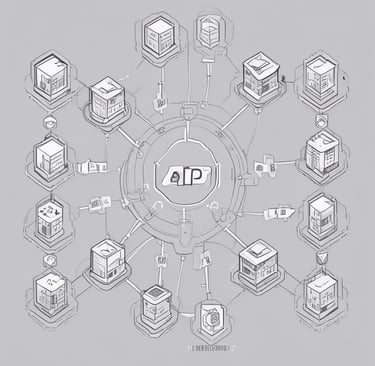
An API (Application Programming Interface) is a set of rules and protocols that allows two different software programs to communicate with each other and share data, similar to how a waiter acts as a messenger between a restaurant customer and the kitchen.
How an API Works (The Restaurant Analogy)
Imagine you are at a restaurant, and you want to order food:
You (the Client): The application or program that wants information or to perform an action (e.g., a weather app needing the local temperature).
The Waiter (the API): The intermediary that takes your request, translates it into a format the kitchen understands, and brings the response back to you. The API provides a "menu" (documentation) of what you can order and the rules for ordering it.
The Kitchen (the Server): The external system that processes the request and prepares the "food" (data or functionality).
The key idea is that you don't go into the kitchen yourself or need to know how the food is prepared; the waiter handles all the complexity for you, ensuring a seamless experience.
Real-World Examples
APIs are the "invisible backbone" of modern digital experiences:
Weather Apps: Your phone's weather app doesn't gather weather data itself. It uses a weather service's API to fetch real-time forecasts and display them to you.
Online Payments: When you pay with PayPal or Stripe on an e-commerce site, an API securely connects the website to the payment processor to handle the transaction without the site handling your sensitive financial details.
Logins: The option to "Log in with Google" or Facebook on third-party websites uses APIs to verify your identity and grant access without requiring you to create a new account.
Maps: Ride-sharing or delivery apps use mapping APIs (like the Google Maps API) to show maps, track locations, and provide directions within their own application.
Why are APIs important?
Efficiency: Developers don't have to build every function from scratch. They can use existing, proven APIs to add functionality quickly.
Security: APIs add a layer of security, controlling access to data and functionalities and often requiring authentication (like API keys or tokens).
Connectivity: They enable different applications, systems, and devices to talk to each other, fostering a connected digital world.
Portfolio
Hire Amit Tamse for your work!
Contact
Connect
Reach me at : amitktamse@gmail.com
+1 408 582 4075
© 2024. All rights reserved.